
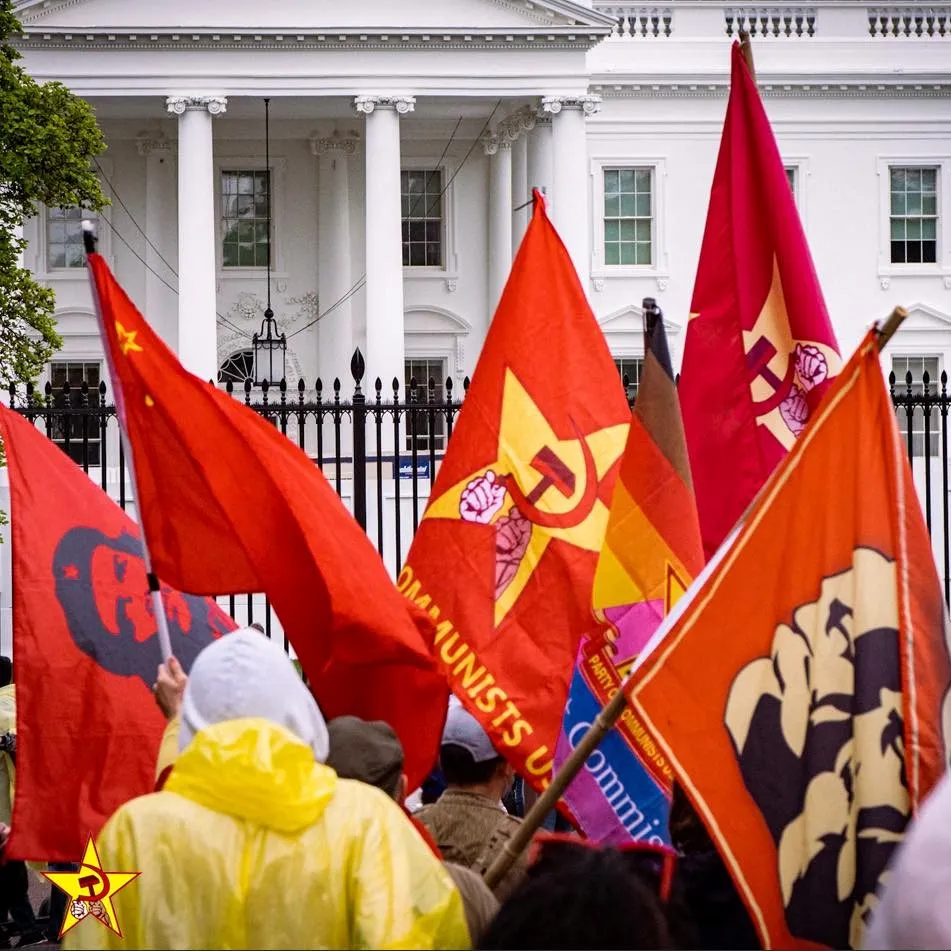
We are told that poverty is inevitable. That homelessness is inevitable. That children going hungry while warehouses overflow is inevitable. That a worker can labor for decades and still face eviction, medical debt, or hunger in old age. We are told that there is simply “no alternative.”
But there is an alternative. We know it because we see the contradiction in capitalism every day. We see it when the person who cleans the hospital cannot afford the treatment provided inside it. We see it when a worker spends eight, ten, or twelve hours producing wealth and still cannot afford a decent home. We see it when shelves are full while families go hungry, when buildings sit empty while people sleep on sidewalks, and when technology advances at astonishing speed while millions remain trapped in insecurity.
We are told these are unfortunate accidents or side effects of “business”.
Marxists ask whether that is true.
Before we are consumers, taxpayers, employees, customers, or statistics, we are human beings who must work to survive. We build the houses. We grow the food. We drive the trucks. We care for the sick. We teach the children. We maintain the infrastructure. We write the software. We clean the offices. We unload the containers. We manufacture the goods.
We make society function.
And yet the wealth produced by our collective labor is not collectively controlled. A tiny minority can own enormous amounts of property and capital while millions of working people remain dependent upon a paycheck that can disappear tomorrow. That contradiction is at the heart of capitalism. The worker produces, but does not control. The worker creates, but does not decide. The worker makes the wealth, but must beg for scraps to survive. Capitalism teaches us to measure everything, a person’s worth becomes their income, a home becomes an investment, healthcare becomes a commodity, education becomes a debt, time becomes something to sell.Even our dreams are turned into products!
We are encouraged to compete against the person standing beside us for a better job, a cheaper apartment, a promotion, a place at a good school. But the person beside us is not our enemy. The worker across the factory floor is not our enemy. The nurse struggling to pay her bills is not our enemy. The immigrant working two jobs is not our enemy. The unemployed worker searching desperately for a job is not our enemy. Our lives may look different, but beneath those differences is a common reality: we depend upon our labor to live. Capital benefits when we forget that.
American history is filled with attempts to divide working people against one another. Race, nationality, religion, gender, immigration status, region, and occupation have all been used to create boundaries between people who might otherwise recognize common interests. Racism has inflicted enormous suffering, while also providing a powerful means of dividing workers. The history of slavery, segregation, Indigenous dispossession, racial discrimination, and exploitation of immigrant labor cannot simply be erased from our understanding of American capitalism. A working class movement worthy of the name must confront oppression wherever it exists. There can be no liberation built upon another person’s subjugation.
Imagine what society could look like if we began with a different question. Not, “How much money can this make?”, but instead, “What do people need?”. We could ask how many homes need to be built rather than how profitable housing construction will be. We could ask how many people need medical care rather than how much revenue treatment can generate. We could ask what kind of education children deserve rather than what level of debt their families can tolerate. We could ask what the planet can sustain rather than how quickly resources can be extracted. These are not merely economic questions. They are moral questions. They concern what kind of society we want to be.
Capitalism wants us to believe that it is simply human nature. It is not. Human societies existed before capitalism, and they will not exist under capitalism forever. The institutions surrounding us were created by human beings. The factories, corporations, banks, property laws, workplaces, and markets that shape our lives are historical creations.And what human beings have created, human beings can change. That does not mean change will be easy. It does not mean socialism comes automatically. It means that resignation is not the same thing as realism.
It is easy to feel powerless alone. One worker asking for a raise can be ignored. Thousands of workers acting together cannot be ignored so easily. One tenant can be dismissed. Organized tenants can demand repairs, affordable rents, and dignity. One community can be forgotten. Organized communities can force their needs into public debate. Organization transforms individual frustration into collective power. That is why organization matters to Marxists. Not because working people need someone to save them but because working people must become conscious of their own collective power.
Every generation inherits a world it did not create. We inherited wars we did not start, inequalities we did not design, institutions we did not build, and economic relationships that often seem too enormous to challenge. But the next generation will inherit the world we leave behind. That gives us a responsibility. We can accept the argument that nothing can change. Or we can recognize that every major advance in human history once appeared impossible to someone. The eight-hour day was once called impossible. Workers’ rights were once called impossible. Civil rights were once called impossible. Social programs were once called impossible. History does not move because the powerful suddenly become generous. It moves because ordinary people organize, struggle, sacrifice, and demand something better.
We fight because no child should go hungry in a society capable of feeding everyone. We fight because no person should die because they cannot afford medical care. We fight because housing should be a human necessity before it is an investment vehicle. We fight because the people who produce society’s wealth deserve a voice in how that wealth is used. We fight because racism and oppression diminish the lives of both those who suffer them and the society that permits them. We fight because war destroys working-class lives while powerful interests calculate its costs and benefits. We fight because the planet is not an infinite warehouse for capital. We fight because democracy should not end at the factory gate. And we fight because we refuse to accept that humanity’s enormous productive power must remain chained to the pursuit of private profit. The struggle for a better world begins with recognizing the world as it actually is. But it does not end there.
We are not powerless. We are the people who keep society running. We are the people who build, teach, heal, transport, harvest, manufacture, clean, maintain, and create. We are the majority. The question before us is whether that majority will remain divided and powerless—or discover what it can accomplish together. We fight because we are tired of being told that the world has to be this way.
That is why we fight.
