
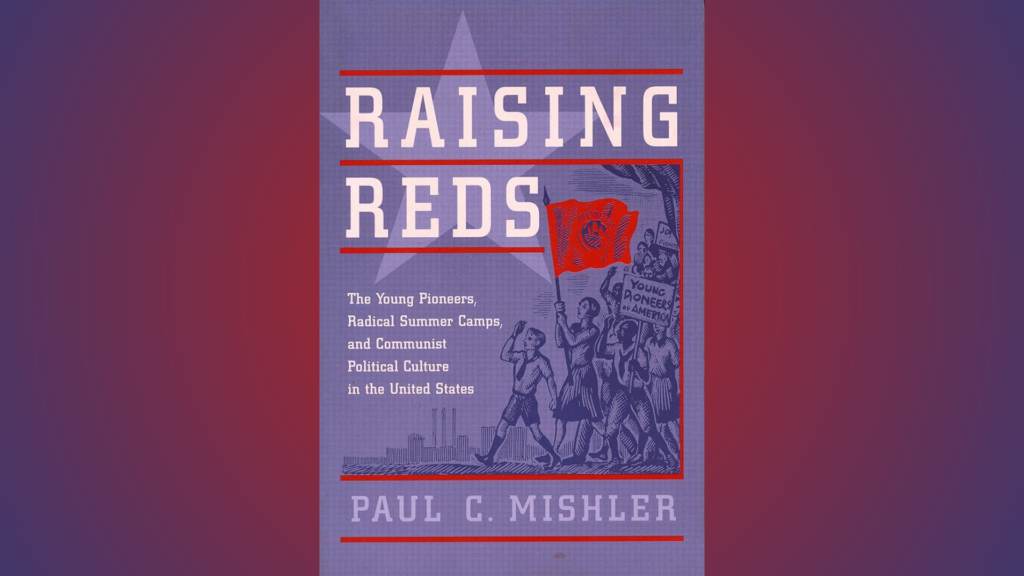
Continuation from Part 2 – Raising Reds Review
The final chapter before the conclusion “Primers for Revolution” brings up a lot of different communist and socialist children’s literature and how best to teach young children. Its amazing that Communist as early as the 1920’s and 1930s were writing stories that broke racial and cultural barriers decades before the civil rights movement in the USA. I think an interesting point by the author after discussing three socialist authors and their children’s books was
“Regardless of their differences, the importance of biological evolution in the works of these three authors highlights the importance of the Darwinian theory in the worldview of the socialist before the first world war. By comparison, its absence from Communist children’s books is notable. The Communist emphasis on voluntary action and participation in political struggle distinguishes their children’s stories from the socialist tales of natural and inevitable change.”
Another point the author made on the difference between earlier socialist children’s books and communist children’s books was:
“However, in general, socialist children’s books differed from those of the communist. The themes of children’s involvement in politics, the importance of ethnic diversity, the experience by children of economic injustice, and conflictual relations within the family are all absent in the socialist children’s books, while they form the core of those books published under the auspices of the communist party”
This shows the party did prioritize organizing and educating children and that they did not merely view it as a periphery issue, but an issue central to the development of a revolutionary working-class movement. The party shifted its focus in children’s literature to be in line with the initiatives of the popular front and released a great deal of rich stories for children.
